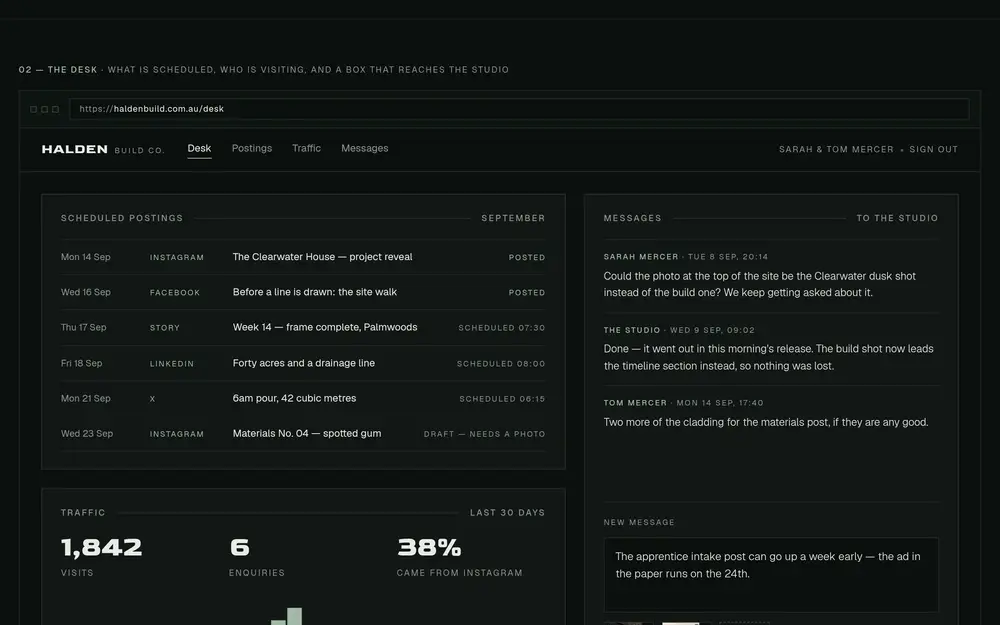
 Fig. 8 · The client desk
A desk on the client’s own site, behind a password. Sent by evening, read by an agent that night, reviewed and live by nine.
An agent here is a small program with a language model at its centre and a short list of things it may do: read a message, look something up, draft a reply, make a booking, send an invoice. Each one is drawn out before it is built, so you can see exactly what it touches and where it stops.
It sits on the website and the accounts we already build and look after (sheet 2), which is why it can reach the calendar, the invoices and the customer list without a stack of new subscriptions.
Not everything needs a model. Most of a business’s repeated work is plain plumbing: the form that should land in the spreadsheet, the order that should become an invoice, the nightly job that decides what needs doing. That part is written once, left running, and the agents sit on top of it.
Fig. 8 · The client desk
A desk on the client’s own site, behind a password. Sent by evening, read by an agent that night, reviewed and live by nine.
 Fig. 9 · Texts through your own phone
An agent reads and sends texts through the owner’s own Android phone, over the local network. No relay in the cloud, no new number for customers to learn.
One pipeline finds businesses that are online but have no website and writes a short file on each; the next builds a demo site from it; the last texts the link and sorts the replies, passing on the ones that want to talk.
The week’s Instagram and TikTok posts are drafted, set and scheduled by an agent, then read once before they go out.